

Content
- Details
In the last few years, the number of dogs diagnosed with Brucella canis infection in the UK is increasing. Of those diagnosed, the majority have come from or travelled to endemic countries outside of the UK.
Clinical signs seen in dogs can include (but are not limited to):
- Reproductive issues - abortion, inflammation and infection of the prostate, testicles and infections of the womb
- Inflammation and infection of joints or of the discs along the spine
- Inflammation and infection of the eyes
Importantly, many dogs carrying the infection have no signs of illness but can still infect other dogs and people.
In humans, symptoms of infection can often be non-specific flu-like signs. In both infected dogs and people, the condition can be very difficult to treat as it does not resolve with routine courses of antibiotics. Patients can be infected for many years or even for life. Patients can require long courses of antibiotics intermittently just to control the infection.
Transmission to other dogs and to people is generally via exposure to bodily fluids. In everyday life the risk of transmission is low (but is not eliminated). However, in patients undergoing treatment in veterinary practice, even for conditions not directly related to Brucella, the risk of transmission can be much higher.
Due to the increasing incidence of Brucella canis infection in the UK, we need to be aware of the Brucella status (test result) of dogs that are considered to have a clinical concern for Brucella infection. This is so we can be aware of any potential link between any illness pets might be experiencing and Brucella infection and to ensure we can keep our team safe.
Dogs that have a clinical concern for Brucella infection include:
- Dogs that have travelled to countries with a high prevalence of the infection
- Dogs that have been imported from countries with a high prevalence of the infection
- Dogs that have had direct contact with infected dogs, particularly breeding dogs
Before treatment or investigation at Wear Referrals, dogs with travel history to high prevalence areas or clinical concern for Brucella need to be tested for the condition. Ideally this would be prior to admission for any further investigation or treatment.
Countries with a higher prevalence of infection include but are not limited to Eastern and Southern Europe, East Asia, Africa and Central and South America.
Testing for Brucella is not straightforward. Currently, the most accurate test we have available is performed at an external lab call APHA and takes 3-7 working days. We are working with referring practices to ensure that pets can be tested prior to their appointment to avoid unwanted delays. This means that prior to presentation we will ask you questions about your dog to identify those at risk of infection based on their travel and contact history. We will contact you and your referring vet directly to discuss testing prior to coming to Wear Referrals if we think that is appropriate.
If your dog has been previously tested with the test at APHA 3 or more months after returning to the U.K. from a high-risk country, we will request a copy of the results from your referring vet before your appointment.
If it is not possible for your referring vet to perform any required test before your initial appointment, we can perform the test after your consultation with us. We will then use the results of a less accurate in-house test combined with your dog’s clinical signs and other test results to determine Brucella risk. Your pet may then need to be hospitalised in our isolation ward and our staff may need to wear stringent PPE (personal protective equipment) when caring for them. There will be an additional cost associated with hospitalisation in our isolation ward and the use of PPE. You will be fully informed of this throughout.
Unfortunately, if you refuse Brucella testing when it has been recommended, our ability to provide optimal care is likely to be impacted.
- Details
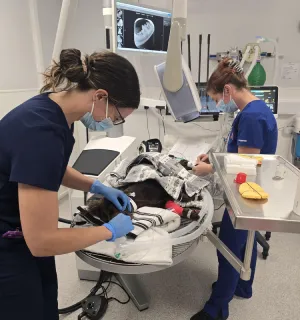
Wear Referrals provides veterinary dentistry for referred dogs and cats. Led by Rebecca Key, RCVS Advanced Practitioner in Dentistry, the service supports a range of dental and oral conditions, including dental trauma, fractured and worn teeth, chronic inflammatory oral disease, restorative dentistry and selected oral surgery cases.
Patients have access to dedicated dental equipment and imaging, and all dentistry procedures are supported by our specialist-led Anaesthesia and Analgesia team.
Why refer dentistry cases to Wear Referrals?
Dentistry cases at Wear are managed with access to dedicated dental equipment, imaging, specialist-led anaesthesia and multidisciplinary support within our referral hospital.
Advanced veterinary dentistry
Cases are assessed and treated by a clinician with advanced postgraduate training and recognised expertise in veterinary dentistry and oral surgery.
Cutting-edge dentistry equipment
Our dentistry service uses dedicated veterinary dental equipment and dental radiography to support assessment and treatment planning.
Specialist-led anaesthesia and analgesia
All dentistry procedures are supported by Wear’s specialist-led anaesthesia and analgesia team.
Multidisciplinary referral care
For relevant oral surgery and oncology cases, our dentistry, soft tissue surgery and oncology teams can work closely together.
When to refer a dentistry case
We welcome referrals for dogs and cats requiring further investigation or advanced treatment of dental and oral conditions.
Cases suitable for referral may include:
- fractured or traumatised teeth
- dental extractions
- teeth that may be suitable for root canal treatment
- fractured deciduous or puppy teeth
- severely worn teeth
- feline chronic gingivostomatitis (FCGS)
- canine chronic ulcerative stomatitis (CCUS)
- enamel defects and restorative dentistry
- impacted or unerupted teeth
- oral cysts, fistulas and palatal defects
- selected oral and maxillofacial surgery cases
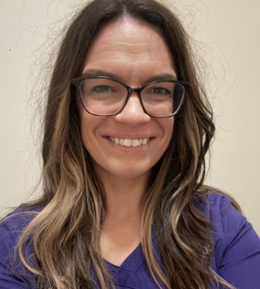
Meet Rebecca Key, RCVS Advanced Practitioner in Dentistry
Rebecca Key leads the dentistry service at Wear Referrals and is an RCVS recognised Advanced Practitioner in Dentistry. Rebecca graduated from the University of Glasgow in 2011 and began her career in mixed practice before moving into small animal practice.
She completed a dentistry-specific internship in Scotland in 2020 and later completed a Postgraduate Certificate in Dentistry and Oral Surgery.
In 2024, Rebecca became an RCVS recognised Advanced Practitioner in Dentistry.
Rebecca has a particular interest in veterinary dental education and continues to develop her clinical knowledge within dentistry and oral surgery. Rebecca gets great satisfaction from improving patient welfare through good dental care.
Outside work, Rebecca spends much of her time with her husband and young family, alongside Chutney, their red Labrador.
Fixed prices for dentistry
We offer a range of fixed price procedures for dentistry, providing cost transparency, peace of mind and a smooth referral process for vets and clients.
Dentistry conditions and procedures we support
Dental trauma and fractured teeth
Teeth are made from three main structures: enamel, dentine, and pulp. Trauma to the hard, shiny enamel on the outside of the crown can cause exposure of the more sensitive tissues contained within – this is painful at the time, and over time will cause changes both within the tooth and in the bone surrounding it.
Fractured teeth can never be left – they require anaesthetised assessment with x-rays to determine the extent of damage and to make a treatment plan. These teeth may need to be extracted, or certain teeth may be candidates for root canal treatment, where the pulp is removed and replaced with an inert material.
Fractured deciduous (puppy) teeth
Despite puppy teeth being temporary in the mouth, fractured teeth still require appropriate treatment. These deciduous teeth have wide pulp cavities and are just as painful if they are fractured. These teeth will still become inflamed and infected, and leaving them in situ can have significant negative consequences for the permanent tooth following behind, so these should always be extracted if fractured.
Worn teeth
Teeth will naturally become worn down over time. However, certain toys, chews and other objects can speed this process along too quickly and cause dental sensitivity and even exposure of the pulp cavity. These teeth should be assessed under anaesthetic with radiographs to assess these teeth and treat them if required.
Canine Chronic Ulcerative Stomatitis (previously CUPS)
Canine Chronic Ulcerative Stomatitis (CCUS) is a painful inflammatory condition affecting the tissues of the mouth. Dogs may develop severe inflammation where oral tissues come into contact with plaque-covered tooth surfaces and can show signs including difficulty eating, drooling, bad breath and behavioural changes associated with pain.
Assessment may include blood tests, dental radiography, professional dental cleaning and biopsies where appropriate. Treatment is tailored to the individual patient and may involve dental treatment, home care and medical management.
Feline Chronic Gingivostomatitis (FCGS)
Feline Chronic Gingivostomatitis (FCGS) is an intensely painful condition for domestic cats. It is understood to be an immune mediated condition with multiple contributing factors. These patients are often very sore and have noticeably inflamed mouths. They often require blood tests and virus testing, then either partial or full mouth extractions with follow-up visits to manage their condition and ensure they are comfortable and out of pain.
Restorative dentistry and enamel defects
Damage or developmental defects affecting enamel can expose the sensitive dentine beneath the tooth surface and make affected teeth more prone to plaque accumulation and discomfort.
We assess affected teeth under general anaesthesia using dental radiographs before determining the most appropriate treatment. Where suitable, damaged surfaces can be prepared, sealed and restored using composite material to protect exposed dentine and create a smoother tooth surface.
Patients with enamel defects may require ongoing dental home care and future monitoring.
Oral surgery and oncology
Treatment of fistulas, palatal defects, impacted or unerupted teeth, and oral cysts all require expertise in dentistry and oral/maxillofacial surgery. Our oncology, soft tissue surgery and dentistry departments work closely together to provide the very best care for our oral surgery and oral cancer patients.
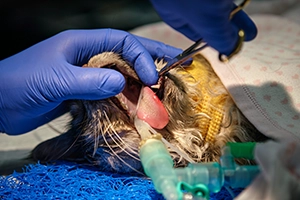
Dentistry supported by specialist-led anaesthesia
All dentistry cases at Wear are supported by our highly experienced specialist-led anaesthesia and analgesia team.
Find out more about anaesthesia and analgesia at Wear Referrals
How to refer a dentistry case
As a referral hospital, we can only accept cases directly from vets. Pet owners need to get a referral to Wear via their vet.
There are two ways to refer a dentistry case to Wear:
- Call us directly for urgent support or in an emergency
- Complete a website form including information on the pet’s history, any radiographs taken and an image of their mouth.
Refer a dentistry case
For non-urgent dentistry referrals, please complete the form on the link below.
What happens when you refer a dentistry case?
Once a dentistry case is referred to us, our client care team will call the client within 24-48 hours of receiving the referral and book the next available appropriate appointment.
If the referral is received via a website form, an email confirmation of the booked appointment will be sent to the primary care practice.
Following discharge of the patient and once all the results have been received and reported, a referral report will be emailed to the primary care practice.
Information for pet owners
If you are concerned about a dental or oral problem affecting your dog or cat, please discuss with your primary vet and ask them to complete the referral form with us at Wear Referrals.
Dentistry FAQs
Can I discuss a dentistry case before referring?
Yes, referring vets can send us advice requests by calling us directly, just like our other services.
What information should I send with a dentistry referral?
Referring vets should send the pet's history, any radiographs they have taken, and photos of the patient's mouth if possible (mouth closed, lips pulled back, both sides of the mouth and the front).
Do you treat fractured teeth in dogs and cats?
Yes, we treat fractured teeth in both species. This may be restoration, extraction, or endodontic treatment depending on which tooth is affected and how it has been fractured.
Do fractured puppy teeth need treatment?
Yes, these teeth are painful, and infected and inflamed deciduous teeth may cause issues for the emerging adult tooth beneath. These teeth should be extracted promptly.
Are dentistry procedures performed under general anaesthesia?
Yes - all dentistry procedures are performed under general anaesthetic. At Wear Referrals, the safety of our patients is of paramount importance hence why we have a team of specialists in anaesthesia and analgesia who are responsible for creating tailored anaesthetic and pain relief plans for all of our referral patients.
Can pet owners refer directly to Wear?
No, they need to be referred by their primary care practice.
- Details
We offer fixed price procedures for some of the more commonly performed dental procedures. Our aim is to support a smooth referral process and provide transparency of costs for clients.
All dental fixed prices packages include:
- Consultation
- Conscious oral assessment
- Specialist led anaesthesia management
- Full oral assessment
- Dental radiographs
- Ultrasonic scaling
- Home dental care advice
Dental Grade 1
| Procedure: | Standard price (Mon-Fri, 8am-6pm) (incl. VAT): | What is included: |
|---|---|---|
| Dental cleaning and preventative dentistry (scale and polish, no extractions) | £720 | Consultation, general anaesthesia, oral assessment, radiographs, scale and polish, EPOC. |
Dental Grade 2
| Procedure: | Standard price (Mon-Fri, 8am-6pm) (incl. VAT): | What is included: |
|---|---|---|
| Up to five simple extractions | £980 | Consultation, general anaesthesia, oral assessment, radiographs, scale and polish, EPOC, nerve block, crown amputation, up to five extractions, up to two weeks’ medication for discharge. |
Dental Grade 3
| Procedure: | Standard price (Mon-Fri, 8am-6pm) (incl. VAT): | What is included: |
|---|---|---|
| Up to 10 advanced extractions | £1,300 | Consultation, general anaesthesia, oral assessment, radiographs, scale and polish, EPOC & haem, nerve block, crown amputation, up to 10 extractions, up to two weeks’ medication for discharge. |
Dental Grade 4
| Procedure: | Standard price (Mon-Fri, 8am-6pm) (incl. VAT): | What is included: |
|---|---|---|
| 10 or more extractions | £1,675 | Consultation, general anaesthesia, oral assessment, radiographs, scale and polish, EPOC & haem, nerve block, crown amputation, full oral extraction, up to two weeks’ medication for discharge. |
Retained Deciduous Teeth Extractions
| Procedure: | Standard price (Mon-Fri, 8am-6pm) (incl. VAT): | What is included: |
|---|---|---|
| Removal of retained baby teeth | £1,510 | Consultation, general anaesthesia, oral assessment, radiographs, scale and polish, EPOC & haem, nerve block, crown amputation, full oral extraction, up to two weeks’ medication for discharge. |
For other procedures at Wear Referrals, our clinicians are happy to discuss cases and provide estimates as needed.
View all of our Fixed Price Packages
NOTE: All prices include VAT. Some post-operative medication is not included as this can vary significantly between patients. Although major postoperative complications are unusual, any costs incurred relating to unexpected postoperative complications are not included in our fixed-price packages.
- Details

If your pet is facing a complex medical condition, they may benefit from the advanced care and expertise offered by a veterinarian who has specialised in a specific area of veterinary medicine, undertaking further training and qualifications in their area of interest.
A referral to a Specialist typically happens when your primary care vet feels that specialist level skills and knowledge, or access to more advanced diagnostic tools are needed to provide the best care, for the best outcomes.
Your primary care vet team is kept informed of your pet’s progress following any investigations or treatments with us, and will continue providing ongoing care once your pet is discharged from our services.
At Wear Referrals, our team includes Board Certified Specialists, experts who hold the highest level of professional accreditation.
What does it take to become a recognised Specialist?
- A minimum 5 year Veterinary degree at university and exam to enter the register of practicing veterinarians.
- A minimum 1 year internship, working under and learning from Specialist clinicians or satisfactory veterinary practice equivalent of a minimum of two years.
- 3-4 years Residency Training Program, working closely with and under the supervision of registered Specialists while studying in their chosen field, during which time they must publish , peer reviewed research in their chosen field.
- Final examinations to achieve a Diploma in their field
In order to maintain their specialist status and ensure that they are keeping abreast of up-to-date research, specialists must show that they have contributed to their field through publication of research in scientific journals, providing teaching and continued education in their field, attending conferences, and mentoring future specialists. Reaccreditation processes take place every 5 years.
Due to the extensive training, examination process, and reaccreditation required to achieve specialist status, you can be confident that when you’re referred to our hospital, you are in the most highly qualified and clinically skilled hands.
Can I Refer My Pet to a Specialist myself?
While the guidelines set by our governing body mean that you cannot refer your pet directly to us, when your vet is considering that a referral may be required you are welcome to ask your vet to refer your pet to Wear Referrals for Specialist treatment and care.
We require your pet’s full medical history and diagnostic records to provide the most informed care, which your primary vet can share with us.
What Specialist Services Does Wear Referrals Offer?
Anaesthesia and Analgesia
Our anaesthesia team supports the journey of each patient through our hospital safeguarding patient safety and the best pain management by applying tailored anaesthetic and sedation plans, together with advanced techniques. The team ensures safe and comfortable outcomes during diagnostic .and surgical procedures, as well as in the peri-anaesthetic period.
Diagnostic Imaging
Our radiology team employs medical imaging techniques including X-ray, CT, MRI, ultrasound and fluoroscopy to support our other Specialists in reaching accurate diagnoses and planning treatments.
Internal Medicine
We provide expert care and comprehensive diagnostics for complex internal medicine cases, including endocrine, gastrointestinal, and immune-mediated diseases, supporting your pet’s long-term health and quality of life.
Neurology
From seizures to paralysis and balance disorders, our neurology team understand, diagnose and treat disorders of the brain, spinal cord and nerves to restore movement and improve quality of life.
Oncology
Our oncology team offers advanced diagnostics and treatment options tailored for patients with cancer. Treatment may aim for a cure when possible, or to extend survival while maintaining the highest possible quality of life.
Orthopaedics
We offer advanced diagnostics and surgical treatment for a range of orthopaedic conditions including fracture repair, joint surgery, or treatment for mobility issues. Our team provides expert musculoskeletal care with the aim to restore your pet's mobility and quality of life.
Soft Tissue Surgery
We have expertise in performing surgery on a variety of complex cases involving the respiratory, urogenital, gastrointestinal and other systems, as well as cancer removals. We offer minimally invasive surgical options to optimize your pet's recovery.
At Wear Referrals we treat every patient as if they were one of our own. Our highly trained team of vets, nurses, and support staff are passionate about providing outstanding veterinary treatment and care.
- Details
Soft tissue surgical cases often arrive with uncertainty rather than a neat diagnosis. Clinical signs may be vague, intermittent or multisystemic, particularly with abdominal or thoracic disease, and decision-making hinges on whether surgery will clarify diagnosis, resolve pathology, or introduce unnecessary risk.
Referral level assessment is designed to define disease extent, determine surgical relevance and plan intervention with appropriate peri operative support. Patients may be referred with suspected neoplastic disease, complex gastrointestinal disorders, hepatobiliary pathology, thoracic disease requiring surgery, or persistent signs that do not resolve despite appropriate medical management.
Many patients have already undergone sensible first opinion investigation and stabilisation. Escalation is considered when diagnostic ambiguity persists or when the clinical threshold for intervention is reached, including in cases initially assessed in practices such as https://www.blythwood.com.
Within the referral setting, diagnostics are selected to answer specific questions about location, involvement of adjacent structures and likely resectability. Advanced imaging such as ultrasonography, computed tomography and contrast studies may be used where they meaningfully change decision making. This approach helps avoid premature intervention in patients whose signs are non-specific or whose disease involves multiple systems.
Surgical management is tailored to the individual case and guided by diagnostic findings, disease behaviour and patient health status. Procedures may include exploratory laparotomy, gastrointestinal surgery, hepatobiliary intervention, thoracic surgery and soft tissue oncologic resection. Peri operative planning and post-operative monitoring are central, particularly where comorbidities increase anaesthetic or recovery risk.
Escalation may occur after careful monitoring in primary care, where clinical progression becomes more apparent. This can include cases managed over time in practices such as https://www.woodward-vets.co.uk, where evolving findings support the need for referral level diagnostics or surgery.
After surgery, communication focuses on continuity. Reports outline findings, procedures and recommended aftercare, supporting ongoing pain control, nutritional management, wound care and follow up within primary practice.
Referral level soft tissue surgical care supports accurate diagnosis and definitive management when first opinion treatment is no longer sufficient.
- Details
Neurological presentations can be deceptively complex. Two patients may show similar clinical signs yet have very different underlying disease processes, and early localisation can be challenging when signs are mild, fluctuating or influenced by pain. Referral level neurology is centred on structured localisation, diagnostic clarity and careful decision making about escalation.
Common indications include progressive weakness, altered gait, seizures, vestibular signs, spinal pain with neurological deficits, or changes in mentation that cannot be explained by systemic disease alone. Many patients have already received appropriate stabilisation and symptomatic treatment in primary care, and escalation is often considered when signs persist, recur or progress. This may follow initial assessment in practices such as https://www.boundaryvets.co.uk
Referral assessment begins with a detailed neurological examination to establish lesion localisation and refine differentials. Advanced imaging, particularly magnetic resonance imaging and computed tomography, is then used to evaluate intracranial and spinal pathology. This helps distinguish compressive, inflammatory, vascular, infectious and neoplastic conditions that can appear similar on clinical examination alone.
Once a diagnosis is established, management may remain medical, surgical, or a combination depending on disease behaviour and patient factors. Where structural disease results in compression, instability or deterioration, neurosurgical intervention may be indicated. Procedures can include decompression for intervertebral disc disease, stabilisation techniques for vertebral instability and surgery for selected intracranial lesions, with peri operative planning guided by imaging findings and neurological status.
Escalation is sometimes required after a period of observation within primary care settings where neurological change becomes clearer over time. This can include cases previously monitored in practices such as https://www.woodward-vets.co.uk, where progression triggers the need for definitive imaging or intervention.
After investigation or treatment, clear reporting supports ongoing management within primary care. Rehabilitation, pain control and longer term monitoring are typically coordinated outside the referral setting to preserve continuity while ensuring clinical oversight remains consistent.
Referral level neurological and neurosurgical care supports accurate diagnosis and appropriate escalation when first opinion investigation is insufficient.
- Details
Orthopaedic referral work is often less about identifying that a patient is lame and more about establishing why that lameness persists, changes, or returns despite sensible first opinion management. Subtle compensatory gait patterns, intermittent pain and reduced tolerance for exercise can mask more complex joint or bone pathology, particularly in chronic disease.
In a referral setting, the aim is to define the mechanical problem accurately and then decide whether intervention is appropriate, proportionate and likely to improve long term outcome. Many patients arrive having already had careful primary care assessment and analgesic trials, including those seen initially in practices such as https://www.boundaryvets.co.uk
Specialist assessment typically combines a detailed orthopaedic examination with targeted diagnostics chosen to answer specific clinical questions. Advanced imaging may be used to clarify joint incongruity, identify occult fracture, assess complex elbow or shoulder disease, or define the extent of degenerative change. This is particularly valuable where standard imaging does not fully explain clinical signs, or where more than one limb is involved.
Surgical planning is guided by diagnosis, patient factors and the expected functional goal. Procedures may include fracture stabilisation using contemporary fixation systems, techniques for cruciate ligament disease, arthroscopic evaluation and management of intra articular pathology, and corrective surgery for selected deformities. Not every case benefits from surgery, and clear criteria are applied when weighing likely benefit against peri operative risk.
Where progression indicates that conservative management is no longer achieving adequate comfort or function, escalation may be appropriate. This can follow a period of structured monitoring within primary care environments such as https://www.blythwood.com, where changes over time help define the point at which referral level diagnostics or surgery may add value.
After intervention, the focus shifts to recovery and durable improvement rather than rapid discharge. Communication supports ongoing pain management, rehabilitation and monitoring within primary care, maintaining continuity once the patient returns to first opinion oversight.
Referral level orthopaedic care supports accurate diagnosis and targeted intervention when first opinion investigation or treatment is no longer sufficient.
- Details
To support a smooth referral process at Wear Referrals and for transparency of client costs, we offer fixed-price procedures for some of the more commonly performed orthopaedic procedures. Click here to learn more about our oncology service.
Our Oncology Fixed Prices
Oncology and Soft Tissue Surgery packages
| Procedure: | Standard price (Mon-Fri, 8am-6pm) (incl. VAT): | Out-of-hours price (incl. VAT): | What is included: |
|---|---|---|---|
| Anal sac tumour staging and surgery | £6,875 | N/A | Consultation with Oncology and Soft Tissue Surgery, sedation/general anaesthesia, CT of chest and abdomen,blood tests, removal of one or both anal glands, lab fees, up to 2 nights hospitalisation, postoperative pain relief and antibiotics up to 10 days, surgery nurse recheck of incision 10-14 days later |
| Anal sac tumour staging, and surgery including lymph node(s) removal | £8,975 | N/A | Consutlation with Oncology and Soft Tissue Surgery, sedation/general anaesthesia, blood tests, CT of chest and abdomen, removal of sublumbar lymph node(s), one or both anal glands, lab fees, up to 2 nights hospitalisation, postoperative pain relief and antibiotics up to 10 days, surgery nurse recheck of incision 10-14 days later |
Electrochemotherapy
| Procedure: | Standard price (Mon-Fri, 8am-6pm) (incl. VAT): | Out-of-hours price (incl. VAT): | What is included: |
|---|---|---|---|
| Electrochemotherapy first treatment | £1,750 | N/A | Recheck consultation fee, blood test, general anaesthetic, electrochemotherapy, pain killers |
| Electrochemotherapy follow-up treatments | £1,100 | N/A | Recheck consultation fee, blood test, general anaesthetic, electrochemotherapy, pain killers |
Staging
| Procedure: | Standard price (Mon-Fri, 8am-6pm) (incl. VAT): | Out-of-hours price (incl. VAT): | What is included: |
|---|---|---|---|
| Lymph Node Mapping | £2,375 | N/A | Blood tests, general anaesthetic, CT scan to localise lymph nodes, needle biopsy and lab fees, hospitalisation |
For other procedures at Wear Referrals, our specialists are happy to discuss cases and provide estimates as needed.
View all of our Fixed Price Packages
NOTE: All prices include VAT. Some post-operative medication is not included as this can vary significantly between patients. Although major postoperative complications are unusual, any costs incurred relating to unexpected postoperative complications are not included in our fixed-price packages.
- Details
Subcategories
Page 1 of 13